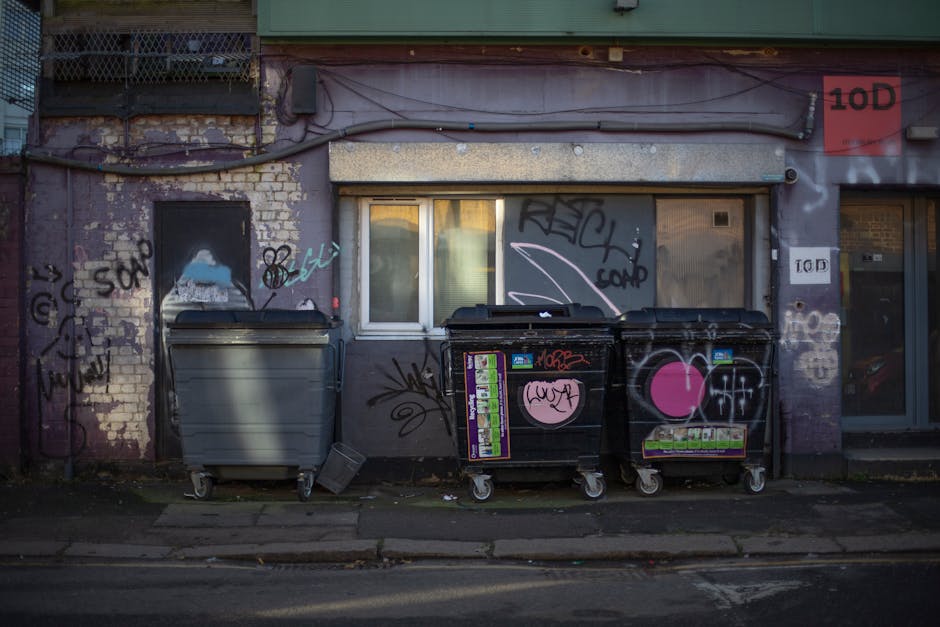
Plumstead High Street rubbish removal guide SE18

If you are dealing with a growing pile of bags, broken furniture, renovation debris, or the kind of mixed waste that always seems to appear after a busy week, this Plumstead High Street rubbish removal guide SE18 is for you. High street clearances are rarely as simple as "just get rid of it". Access can be tight, timing matters, neighbours notice everything, and a quick job can become a messy one if you do not plan it properly.
This guide walks you through the practical side of rubbish removal in the Plumstead High Street area: how it works, what to consider, what to avoid, and when a professional service is the cleaner, safer choice. You will also find a checklist, a comparison table, and some real-world guidance drawn from everyday local jobs - the sort of thing people usually wish they had read before lifting the first bag.
Truth be told, the best rubbish removal plan is usually the one that saves you time without creating a second problem. That means thinking about access, waste type, recycling, and who is responsible for handling it. A bit of know-how goes a long way.
Why Plumstead High Street rubbish removal guide SE18 matters
Plumstead High Street has its own rhythm. There is footfall, traffic, side streets, shared access, and the usual London reality of space being at a premium. That makes rubbish removal more than a household chore. It becomes a small logistics job. If you leave waste outside too early, it can obstruct walkways. If you wait too long, it can start to smell, attract pests, or simply become one more thing hanging over you.
The local context matters because rubbish removal on a busy street is about more than volume. It is about timing, presentation, and handling waste in a way that respects the area around you. A pile of broken chairs or renovation offcuts sitting by the kerb does not just look untidy; it can create avoidable friction with neighbours, passers-by, and anyone managing access for a shop, flat, or property.
There is also a practical side. In mixed-use parts of SE18, one property might be a flat above a business, another a terrace with limited rear access, and another a home with no driveway at all. That is why a one-size-fits-all approach rarely works. A good plan helps you clear the waste efficiently without turning the street into a staging area.
Key point: on a high street, rubbish removal works best when it is fast, tidy, and well organised from the start.
How Plumstead High Street rubbish removal guide SE18 works
In simple terms, rubbish removal means assessing the waste, arranging a collection or clearance method, loading everything safely, and sending it for the right processing route. Depending on the load, that might involve recycling, reuse, disposal, or a combination of all three.
For a high street location, the process often starts with access. Can a vehicle stop nearby? Is the waste upstairs, in a basement, at the back of a shop, or in a flat above a parade? Are there narrow staircases, time restrictions, or shared entrances? These questions shape the whole job. To be fair, the waste itself is only half the story. The route in and out matters just as much.
Here is the typical flow:
- Identify the waste type. Mixed household rubbish, bulky items, garden waste, old office furniture, and builders' waste all need different handling.
- Estimate the amount. A few bags is one thing; a cluttered garage or a post-refurbishment clear-out is another.
- Check for restricted items. Some materials need special handling, especially anything hazardous, electrical, or potentially contaminated.
- Choose the right method. You may want a full clearance, a partial uplift, or a targeted removal of specific items.
- Prepare the site. Clear pathways, separate items if practical, and keep pets, children, or customers away from the loading area.
- Load, remove, and process. A responsible operator should aim to reuse or recycle where possible and dispose of the rest properly.
If you are comparing service options, it is worth looking at broader waste removal support as well as more specific services such as general waste removal, furniture clearance, or builders waste clearance. Different jobs call for different handling, and forcing the wrong solution is where delays creep in. Annoying, but common.
Key benefits and practical advantages
The biggest benefit of organised rubbish removal is simple: you get your space back without having to spend your weekend making endless trips to a tip or storage point. But the real advantages go beyond convenience.
- Less disruption. A planned clearance is usually quicker and tidier than ad hoc dumping or multiple small trips.
- Safer handling. Heavy bags, sharp edges, and awkward furniture are easier to manage when they are moved with the right equipment and technique.
- Better presentation. This matters on a high street, especially for shops, offices, and rental properties.
- More recycling potential. Separating recyclable items early can improve the environmental outcome.
- Less stress. That pile in the hallway or rear yard stops being a background worry.
There is also a business benefit. If you run a shop, office, or hospitality space nearby, clutter can affect customer perception faster than people admit. One overloaded store room or messy back entrance can make a property feel disorganised, even if the front looks spotless. A well-run business waste removal arrangement keeps operations feeling calm and controlled.
And for homes, the payoff is often emotional as much as practical. Clearing a loft, garage, or spare room can feel like taking a breath after holding it for too long.
Who this is for and when it makes sense
This guide is useful if you are dealing with any of the following around Plumstead High Street or the wider SE18 area:
- household junk after a declutter
- bulky furniture that is too awkward to move alone
- shop or office waste after a refit
- builders' debris from decorating or repair work
- garage, loft, or garden overflow
- mixed waste from a move, tenancy end, or inheritance clear-out
It also makes sense if you are not sure what can be taken away and what needs separate handling. For example, fridges, freezers, and some appliances may need different treatment from general rubbish. The same is true for mattresses, sofas, confidential paperwork, or anything that could be classed as hazardous. If you are looking at specialist disposal routes, pages like fridge and appliance removal, mattress and sofa disposal, or confidential shredding can be useful starting points.
Honestly, if you are asking, "Should I do this myself or get help?" the answer usually depends on three things: weight, volume, and access. If any one of those is awkward, the job becomes less fun very quickly.
Step-by-step guidance
Below is a practical way to tackle rubbish removal on or near Plumstead High Street without making life harder than it needs to be.
1. Walk the space first
Do a quick slow walk of the area. Look at the waste, the path out, where it will be loaded, and whether anything fragile or valuable is in the way. This small step saves a surprising number of headaches.
2. Sort items by type
Group general rubbish, furniture, electricals, and special items separately. Even a rough sort helps you see what needs attention. If you have a lot of mixed items, the job may fit a broader home clearance, house clearance, or office clearance approach.
3. Make a note of access issues
Stairs, narrow halls, rear gates, lift access, and parking restrictions all matter. On a busy road, you may need the waste moved in stages. No drama, just planning.
4. Separate anything sensitive or hazardous
Paint tins, chemicals, batteries, sharps, and similar items should not be casually mixed into general waste. If in doubt, treat them as a separate category and get advice before moving them.
5. Decide whether you need a partial or full clearance
A few bags and one sofa are very different from a whole flat or a business store room. If you are not sure, it can help to think in terms of zones: front room, loft, garage, yard, stockroom, or kitchen.
6. Prepare the waste for collection
Break down cardboard, remove loose contents where appropriate, and keep pathways clear. This makes loading quicker and reduces the chance of damage.
7. Choose a sensible disposal route
For mixed household items, a general waste service may be enough. For bulky or specialist items, it is smarter to choose the right dedicated service, such as garage clearance, loft clearance, or garden clearance. That way, you are not shoehorning the job into the wrong box.
8. Confirm how the waste will be handled
It is reasonable to ask what will be recycled, what will be reused, and what will be disposed of. A reliable operator should be comfortable explaining this in plain English. If sustainability matters to you - and it probably should - take a look at recycling and sustainability for a sense of the approach you should expect.
Expert tips for better results
Small decisions make a big difference. That is especially true on a high street where space, time, and access are all limited.
- Take photos before you start. Not for vanity, obviously, but for planning. A few quick photos help you judge volume more accurately.
- Keep a clear loading lane. Even a narrow strip of clear floor or pavement space can save repeated lifting and backtracking.
- Use the "touch it once" rule. If you pick up an item, decide immediately whether it is staying, going, or being separated. It cuts down on endless shuffling.
- Be realistic about weight. A bag can look light until you lift it. Then, well, reality arrives.
- Ask about insurance and safety. If a team is working in tight or awkward conditions, you want to know they are operating carefully. That is where a page like insurance and safety becomes relevant, not just nice to have.
One more practical point: if the waste includes something large and oddly shaped, such as a wardrobe or office desk, measure doorways before moving it. You would be amazed how often a "simple" item gets stuck halfway out of a room. Happens all the time.
Expert summary: the smoothest rubbish removal jobs are rarely the fastest to start. They are the ones where access, waste type, and disposal route are thought through before anything is lifted.
Common mistakes to avoid
A lot of rubbish removal trouble is self-inflicted, usually because people are trying to save time. Ironically, that is often how they lose it.
- Mixing everything together. Once mixed, useful items are harder to separate, and some waste may need special handling.
- Ignoring access constraints. If the vehicle cannot stop nearby or the stairwell is tight, the job needs a different plan.
- Leaving waste outside too early. On a public street, that can create avoidable complaints or clutter.
- Underestimating volume. Two "small" piles can turn into a van-full very quickly.
- Forgetting specialist items. Appliances, mattresses, and hazardous materials are easy to overlook until the last minute.
- Choosing a clearance method before checking what is actually being removed. That can lead to the wrong service for the job.
Another common mistake is not asking enough questions. If you are dealing with a mixed load, ask how the waste will be sorted, whether recyclable items are separated, and what happens to items that cannot go into standard waste streams. A little curiosity now saves confusion later.
Tools, resources and recommendations
You do not need a warehouse of equipment to organise rubbish removal well. In most cases, a few sensible tools are enough.
- Heavy-duty bags or sacks: useful for broken-down general rubbish and lighter mixed waste.
- Gloves: a basic but important layer of protection, especially for old furniture, rubble, or yard waste.
- Tape and labels: handy if you are separating items into "keep", "donate", "recycle", and "remove".
- A tape measure: worth having if bulky items must pass through narrow doors or stairwells.
- Basic dust sheets or floor protection: useful if items are being moved through a clean interior space.
For specific types of waste, it can help to read the relevant service page before you book. For example, furniture disposal is useful if the main issue is old sofas, tables, or wardrobes. If you are clearing a room rather than a single item, a more general flat clearance or furniture clearance may make more sense.
If you want to understand how a service is priced or what affects the final quote, the most practical place to start is pricing and quotes. That will help you compare options without feeling like you are guessing in the dark.
Law, compliance, standards and best practice
Rubbish removal is not just a matter of shifting unwanted items away. In the UK, waste handling carries responsibilities, especially when commercial waste, electrical items, or hazardous materials are involved. You do not need to memorise legislation to make good decisions, but you should expect any service you use to operate responsibly and to be clear about what it can and cannot take.
Best practice is straightforward:
- do not leave waste in a way that blocks public access
- separate hazardous or specialist items from general waste
- make sure items are transported and processed through appropriate channels
- keep documentation or job confirmation where relevant, especially for business waste
- use a provider that explains safety and environmental handling clearly
If your waste includes electrical items, chemicals, or anything that could pose a risk, treat it carefully rather than assuming it can go in with household junk. For those situations, dedicated pages such as hazardous waste disposal and fridge and appliance removal are more relevant than a standard mixed-load service.
On the commercial side, businesses should pay extra attention to duty-of-care style responsibilities and record keeping. You want your waste trail to be tidy, not just the premises. It is one of those behind-the-scenes details that customers never see, but it matters.
Options, methods and comparison
There is more than one way to clear rubbish from a Plumstead High Street property. The right choice depends on time, waste type, access, and how much hands-on work you want to do yourself.
| Method | Best for | Strengths | Trade-offs |
|---|---|---|---|
| Self-clearance | Small, light loads | Low upfront spend, full control | Time-consuming, physically tiring, multiple trips |
| Skip hire | Longer projects with space to place a skip | Good for ongoing work, useful for builders' waste | Needs space and often permits or access planning; not ideal on tight high streets |
| Man-and-van clearance | Bulky, mixed, or awkward loads | Quick, flexible, suited to tight access | Less useful if you want to load waste gradually over days |
| Specialist item removal | Appliances, furniture, mattresses, hazardous items | Handled appropriately, less risk of misuse | May require separate booking depending on item type |
For many Plumstead High Street situations, a van-based rubbish removal approach is often the most practical. You avoid the hassle of finding a suitable place for a skip, and the team can usually deal with loading on the spot. For renovation waste, though, a builders' service may fit better. If you are unsure which route is right, compare the waste you actually have against the descriptions on the site rather than picking a service by name alone.
Case study or real-world example
A typical local scenario goes like this: a small business above a shop on Plumstead High Street finishes a tidy-up before a new season starts. In the back room there are old display fittings, a couple of broken chairs, flattened boxes, and a few bags of mixed junk that have been building up for months. Nothing dramatic. Just enough to become annoying every time someone opens the door.
The first mistake would be trying to deal with it piecemeal. One bag today, two chairs tomorrow, a box of odds and ends next week. That turns a single job into a string of interruptions. Instead, the better move is to sort the waste first, identify anything that needs specialist handling, and arrange one clear collection window. The load is lifted in one go, the back room is usable again, and the staff can stop stepping around it. Simple. Not glamorous, but simple.
Another example is a flat above a commercial property. Access is narrow, the stairs are awkward, and the resident has a sofa, a mattress, several black bags, and a small fridge to remove. In that case, it is far more sensible to separate the items into the relevant services than to force everything into a generic removal. That is where planning pays off. You save effort, and the job gets handled properly the first time.
The main lesson? A good rubbish removal job is rarely about muscle. It is about sequence.
Practical checklist
Use this before you book or start moving waste:
- Have I identified every item that needs removing?
- Have I separated anything hazardous, electrical, or specialist?
- Do I know whether the load is household, business, builders', or mixed waste?
- Is there enough access for safe loading?
- Have I cleared a path from the waste to the exit?
- Do I need a full clearance or only partial removal?
- Have I checked whether furniture, appliances, or mattresses need separate handling?
- Do I know how the waste will be reused, recycled, or disposed of?
- Have I looked at what can go in a skip if I am comparing removal methods?
- Am I ready to choose a time that causes the least disruption to neighbours or customers?
If you can answer those comfortably, you are probably ready to move forward without nasty surprises. And that, in the end, is what most people want.
Get a free quote today and see how much you can save.
Conclusion
Plumstead High Street rubbish removal is easiest when you treat it like a small project rather than a random chore. Think through access, waste type, and the best clearance method before you start lifting. That one bit of planning can save time, reduce stress, and make the whole job feel far more manageable.
Whether you are clearing a flat, a shop back room, a garden corner, or a post-refurbishment mess, the same basic idea applies: sort first, move safely, and choose the right route for the waste. If you do that, the work becomes straightforward instead of chaotic. Not perfect, maybe. But a lot better.
And once the clutter is gone, the space tends to feel bigger, calmer, and easier to live or work in. Funny how that happens.
Frequently Asked Questions
What is the best rubbish removal option for Plumstead High Street?
The best option depends on volume, access, and waste type. For bulky or mixed loads, a van-based clearance is often practical on a busy high street. For ongoing building work, a builders' waste solution may be more suitable.
Can I leave rubbish outside my property for collection?
Only if it is arranged properly and does not create an obstruction or nuisance. On a high street, it is usually better to keep waste inside until collection time so the pavement stays clear.
What items usually need separate handling?
Appliances, mattresses, sofas, confidential documents, and hazardous materials often need special attention. It is worth checking these separately rather than assuming they can all go in one pile.
Is rubbish removal better than hiring a skip?
It depends on the job. A skip can be useful for longer projects if you have space, but it is not always ideal on a tight or busy street. Rubbish removal is often quicker for one-off clearances.
How do I know how much waste I have?
Take photos from a few angles and compare the load with the space in your room, garage, or yard. If you are still unsure, a quick quote request is usually the easiest way to get a realistic view.
What should I do with old furniture?
Old furniture can often be taken as part of a dedicated furniture clearance or furniture disposal service. If the pieces are large, heavy, or awkward, do not try to force them through narrow spaces without planning first.
Do businesses near Plumstead High Street need special waste arrangements?
Often, yes. Businesses should think about regular waste handling, storage, and the proper routing of commercial rubbish. Clear, documented arrangements are usually the safest and tidiest option.
What if my rubbish includes a fridge or freezer?
Fridges and freezers should usually be handled separately because they are specialist items. Look for appliance-focused removal rather than putting them into a general waste pile.
Is recycling part of rubbish removal?
It should be. A responsible service will separate recyclable materials where possible and route them appropriately. That is one reason to ask how the waste will be processed before you book.
How quickly can rubbish be removed?
That depends on access, the size of the load, and whether specialist items are involved. Small clearances can often be arranged faster than larger mixed or commercial jobs, but planning still helps.
What if I have builders' waste from a renovation?
Builders' waste is usually better handled through a dedicated service, especially if it includes rubble, timber, plasterboard, or other construction debris. It is a different job from general household rubbish.
How do I choose a trustworthy rubbish removal service?
Look for clear explanations of what they take, how they handle different waste types, and how they approach safety and recycling. If pricing is unclear or the service sounds vague, that is usually a warning sign.
Can one collection handle mixed waste?
Often, yes, as long as the items are allowed and properly separated where needed. Mixed waste is common, but specialist items may still need their own route.
Where should I start if I am not sure what I need?
Start by identifying the waste and the access. Then compare it with the relevant service descriptions, such as waste removal, home clearance, furniture disposal, or appliance removal. That usually makes the decision much easier.