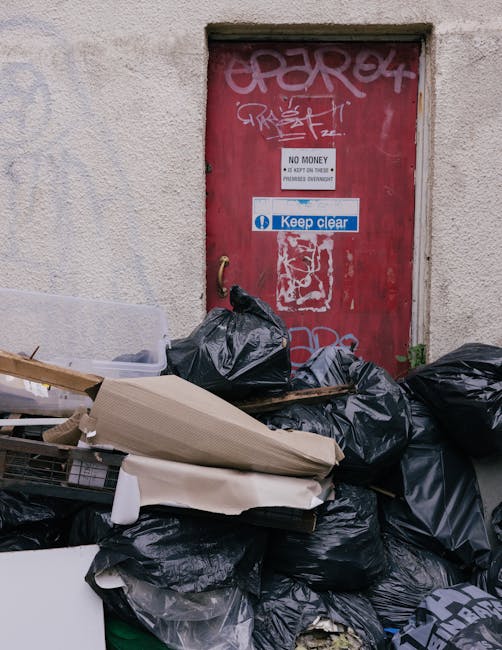
Avoid hidden rubbish removal charges in Plumstead

If you have ever booked a rubbish clearance and then watched the price creep up at the door, you will know how frustrating it feels. Hidden extras can turn a simple tidy-up into a stressful bill you were never expecting. This guide on how to avoid hidden rubbish removal charges in Plumstead explains what to watch for, how pricing usually works, and the questions worth asking before anyone lifts a sack. A little caution up front saves a lot of awkwardness later.
Whether you are clearing a flat, dealing with builders' waste, getting rid of old furniture, or sorting a bigger house clearance, the same rule applies: clarity matters. In Plumstead, as in most parts of London, the best rubbish removal experience is the one where you know exactly what is included, what might cost extra, and who is responsible for what. Let's make that simple.
- Why it matters
- How pricing usually works
- Key benefits and practical advantages
- Who this is for
- Step-by-step guidance
- Expert tips
- Common mistakes to avoid
- Tools, resources and recommendations
- Law, compliance, standards and best practice
- Options and comparison
- Real-world example
- Checklist
- Conclusion
- Frequently asked questions
Why Avoid hidden rubbish removal charges in Plumstead Matters
Hidden charges are more than a nuisance. They make it hard to compare quotes fairly, and they can leave you paying for things you assumed were already included. For a lot of people, rubbish removal is not a luxury purchase. It is a practical job that needs to be done quickly, cleanly, and without drama. If the pricing is murky, the whole job becomes harder to trust.
Plumstead properties can throw up all kinds of clearance scenarios: compact flats with awkward access, terraced homes with tight hallways, lofts full of mixed items, or business premises that need fast turnaround. Each of those can be priced honestly. The trouble starts when a company quotes one figure and then quietly adds charges for stairs, parking, access, heavy lifting, specialist items, or disposal categories that were never properly explained. That is where people feel caught out.
To be fair, not every extra charge is unfair. Some jobs genuinely cost more because they take more labour, more vehicle space, or more handling. The key difference is transparency. A good provider will tell you the cost drivers before the booking is confirmed. If something is likely to change the price, you should know that in plain English, not buried in a vague line of text.
Expert summary: The safest way to avoid surprise rubbish removal costs is to confirm exactly what the quote includes, describe the waste honestly, and ask what would trigger an additional fee before the team arrives.
If you want to understand the service structure more broadly, it helps to review the company's pricing and quotes information alongside the relevant service page for your type of clearance. That makes the conversation much easier from the start.
How Avoid hidden rubbish removal charges in Plumstead Works
Hidden charges usually appear when the original estimate was based on incomplete information. The process should work the other way round: you describe the waste, the access, and the timing, and then the company gives a quote based on those facts. Simple enough. But the details matter.
Most rubbish removal quotes are shaped by a few practical factors:
- Volume of waste: how much needs taking away, often judged by van space, number of items, or load size.
- Type of waste: general household rubbish, builders' waste, furniture, appliances, garden waste, or specialist items.
- Access: stairs, narrow corridors, distance from the vehicle, lift availability, or restricted parking.
- Labour required: whether items are already outside, need carrying down from a loft, or must be dismantled first.
- Timing: urgent collections, out-of-hours jobs, or same-day requests may come with different pricing.
- Special handling: items like fridges, mattresses, or hazardous materials may need specific disposal arrangements.
A transparent provider should explain whether the quote is fixed, estimated, or subject to inspection on arrival. That distinction matters. A fixed quote is clearer for budgeting, while an estimate can be fine if the company explains the assumptions behind it. If the van arrives and the team suddenly says, "Actually, that'll be more," you need to know whether that change was justified or simply poor quoting.
It also helps to understand that some services are better matched to some waste types than others. For example, builders' waste clearance is usually handled differently from a standard home clearance, and office clearance can involve separate expectations around paperwork, confidentiality, and access times. The more closely you match the service to the waste, the less likely you are to run into confusion later. You can see this clearly in options such as builders' waste clearance, office clearance, and home clearance.
Key Benefits and Practical Advantages
The biggest benefit of avoiding hidden rubbish removal charges is obvious: you keep control of the budget. But there are other advantages that are easy to miss until you have lived through a bad booking. Clear pricing saves time, reduces stress, and makes the whole process feel more professional.
- Better budgeting: you can plan the job without leaving room for unpleasant surprises.
- Faster decisions: when quotes are clear, you can compare providers quickly and sensibly.
- Less back-and-forth: transparent information means fewer awkward calls on the day.
- Improved trust: a clear quote is usually a sign of a more organised business.
- Cleaner outcomes: the team arrives expecting the right amount of work, which helps the job run smoothly.
There is also a practical side for homeowners and businesses alike. If you are clearing a property before a sale, preparing a rental, or trying to reopen an office or shop, delays cost money. A job that starts with confusion can ripple into the rest of the day. By contrast, a clear agreement keeps the work moving. You know where you stand, they know what they are collecting, and there is far less room for misunderstanding.
And frankly, nobody enjoys standing in a driveway at 8 a.m. trying to negotiate over a pile of broken furniture. It is just not a fun start to the day.
Who This Is For and When It Makes Sense
This advice is useful for almost anyone booking waste collection in Plumstead, but some people need it more than others. If your job is small and straightforward, the risk of surprise pricing may be lower. If your clearance is mixed, bulky, or difficult to access, the chances of extra charges go up quickly.
It is especially relevant if you are:
- clearing a flat with stairs or limited parking;
- disposing of bulky furniture or mattresses;
- handling builders' rubble or renovation waste;
- emptying a loft, garage, or garden space;
- removing office furniture and equipment;
- booking on behalf of a landlord, agent, or tenant;
- trying to compare a few rubbish removal quotes fairly;
- worried about disposal charges for appliances or specialist items.
If that sounds like your situation, it is usually sensible to spend a few extra minutes on the quote. A quick conversation now is much easier than trying to fix a price dispute later. For larger domestic clearances, pages such as house clearance, loft clearance, and garage clearance can help you match the service to the job.
Businesses should be just as careful. Office jobs often involve access restrictions, reusable items, confidential paperwork, and the need to work around staff or customers. A vague quote for business waste can look attractive at first, then become messy once the real scope is known. If that is your world, take a close look at business waste removal before you book.
Step-by-Step Guidance
Here is a sensible way to protect yourself before any rubbish collection in Plumstead. Nothing dramatic. Just a bit of structure.
- List what needs removing. Write down the main items and whether the load is mixed. A sofa, a mattress, some black bags, and a broken desk are not all the same thing.
- Take a few photos. Pictures help the company judge volume, access, and whether any items need special handling.
- Describe access honestly. Mention stairs, basement storage, narrow paths, gated entrances, parking restrictions, and whether the waste is inside or outside.
- Ask what the quote includes. Check labour, loading, disposal, congestion or parking issues, and whether there are any item-based charges.
- Confirm special items separately. Fridges, sofas, mattresses, and potentially hazardous materials may need separate treatment.
- Ask for the price basis in writing. Even a short email or booking confirmation can help prevent confusion.
- Check the cancellation or complaint process. If something goes wrong, you want to know the next step.
- Only book once you understand the total cost. If you are unsure, pause. A better quote is worth an extra five minutes.
A useful habit is to ask one direct question: "What could make the price change on the day?" If the answer is clear and specific, that is reassuring. If the answer is vague, well, that tells you something too.
When the job involves items with special handling needs, make sure the provider has the right service for them. For example, appliance removal, mattress disposal, or sofa disposal may carry different disposal and loading considerations. You can review those service pages in advance, such as fridge and appliance removal and mattress and sofa disposal.
Expert Tips for Better Results
In our experience, the clients who avoid hidden charges most successfully are the ones who give the clearest brief. Not the longest brief. The clearest. A sentence like "two wardrobes, one bed base, four bags, first-floor flat, no lift, limited parking" tells a provider far more than a general "some rubbish" message ever will.
Here are a few practical tips that really help:
- Be specific about access. The route from room to vehicle is often where pricing changes happen.
- Separate reusable items from waste. It helps the team judge what is actually being removed.
- Check whether dismantling is included. A wardrobe or bed frame may need to be taken apart.
- Keep hazardous items out of the mix. If you suspect chemicals, paint, or similar waste, flag it early.
- Use a provider's own pricing guidance. A well-written pricing page often tells you a lot about how honestly they work.
- Read the terms before you book. It is not glamorous, but it is useful. Bit boring, yes. Still useful.
One small but important point: if a price sounds much lower than every other quote, ask why. There may be a genuine reason. Or there may be a catch. Often the catch is not dramatic; it is just hidden in the wording. "From" pricing, for example, can be fair enough if you know what the starting point covers. Trouble starts when the final bill is not anchored to any meaningful detail.
For peace of mind, some readers also like to check how a company handles payments and security before sharing details. That is sensible, especially for online bookings. The page on payment and security is worth reviewing if you want extra reassurance.
Common Mistakes to Avoid
The same mistakes come up again and again. Luckily, they are easy to avoid once you know what they are.
- Giving vague descriptions. "A bit of rubbish" is not enough for a serious quote.
- Forgetting access problems. A narrow stairwell or restricted parking can change the job.
- Assuming all waste is priced the same. It usually is not.
- Not checking special items. Fridges, mattresses, and hazardous waste may be handled differently.
- Ignoring the small print. Terms matter, even if they are a bit dull.
- Booking on price alone. Cheapest is not always cheapest once the extras land.
- Not asking what happens if the load is different on arrival. This one catches people out more often than you would think.
Another mistake is leaving everything until the day of collection. If the team turns up and you are still deciding what stays and what goes, the quote can become unstable very quickly. Better to sort the items first, then book. That way everyone starts from the same page.
If your job is partly about sorting valuable items from waste, or you are trying to clear a whole property with less stress, the broader services such as furniture clearance and flat clearance can help you plan more carefully.
Tools, Resources and Recommendations
You do not need fancy tools to avoid hidden rubbish removal charges. A phone, a camera, and a notebook are usually enough. But a few simple resources make the process easier.
- Photo evidence: take wide shots of the room or pile, then close-ups of unusual items.
- Room-by-room list: helpful for house clearances, lofts, and garages.
- Short message template: send the same basic details to each provider so quotes are easier to compare.
- Booking confirmation: keep it handy so the agreed scope is easy to check.
- Terms and conditions: read them before payment, not after.
It is also sensible to look at related service pages if you have a specific waste type. For example, builders' waste is best handled through builders' waste clearance, garden waste through garden clearance, and appliance-heavy jobs through fridge and appliance removal. Matching the right page to the right job helps reduce misunderstandings before they start.
If you are comparing providers, ask yourself a simple question: does this company make it easy to understand the price? If the answer is no, move on. A clear booking process is usually a sign of a better overall service. For some customers, the reassurance of a straightforward online route, such as book online, is exactly what they need.
Law, Compliance, Standards, or Best Practice
Rubbish removal is not just about clearing space. In the UK, waste must be handled responsibly, and reputable operators should follow proper disposal and safety practices. You do not need to become a waste law specialist, thankfully, but it does help to know the basics.
Best practice usually means:
- clear description of the waste type;
- safe handling of items that could cause harm or contamination;
- proper disposal routes for specialist items;
- honest pricing tied to the actual job;
- appropriate insurance and safety procedures;
- respect for privacy where confidential material is involved.
If a property clear-out includes paperwork, records, or sensitive business material, confidential handling matters. That is where a service such as confidential shredding can be relevant. Likewise, if the waste includes items that require careful treatment, such as chemicals or contaminated materials, a dedicated hazardous waste disposal service is the safer route.
It is also worth checking a provider's own safety approach. Pages like health and safety policy and insurance and safety can tell you how seriously they take the practical side of the work. A company that talks clearly about safety is usually a company that has thought through the details, not just the sales pitch.
For readers who care about sustainability, it is sensible to ask how materials are sorted and where they go next. Transparent recycling practices are a good sign. You can also review recycling and sustainability to see how the service approaches responsible disposal.
Options, Methods, or Comparison Table
Different clearance methods suit different situations. The cheapest option on paper is not always the best in practice, especially if you need speed, labour, or flexible collection times. Here is a simple comparison to help you think it through.
| Option | Best for | Watch-outs | How to avoid hidden costs |
|---|---|---|---|
| Rubbish removal service | Quick collection, heavy lifting, mixed waste, difficult access | Extra fees can appear if access or waste type is misdescribed | Give accurate photos, item lists, and access details |
| Skip hire | Longer DIY clear-outs, ongoing household or building projects | Permits, space, loading limits, and prohibited items | Check what can go in a skip before ordering |
| Specialist item removal | Appliances, mattresses, sofas, or sensitive items | Disposal rules and handling needs vary | Use the correct service page and confirm the item list in advance |
| Full property clearance | End-of-tenancy, probate, downsizing, house moves | Scope can grow unexpectedly if the property is fuller than expected | Walk through the property and agree what stays and what goes |
If you are weighing up a skip against a clearance team, the page on what can go in a skip is a useful reference point. It helps you see where skip hire is fine, and where a collection service may be the cleaner fit.
For broader domestic work, the combination of house clearance and home clearance can be a better match than trying to piece together a job from multiple small arrangements. Less juggling, less confusion. Simple.
Case Study or Real-World Example
Here is a typical Plumstead-style scenario. A resident in a top-floor flat needs to clear a broken wardrobe, an old mattress, several black bags, and a small fridge before the weekend. The first quote sounds low, which is nice enough, but it does not mention stairs, parking, or the fridge. On the day, the price rises because the team says the fridge needs special handling and the access is more difficult than expected.
That situation is avoidable. A better approach would have been to send photos, mention the top-floor access, and specify the fridge from the beginning. A transparent quote might have been slightly higher at first, but the final bill would have matched reality. No surprises. No back-and-forth. Just a job done properly.
Now compare that with a second case: a small business near Plumstead books office clearance for furniture, boxes of archive material, and a few bulky items. They ask in advance about access windows, whether the paperwork can be handled separately, and whether the quote includes labour for moving items down two flights of stairs. The result is a cleaner collection, a stable price, and very little disruption to staff. That is the sort of outcome people actually want.
Little planning goes a long way. Honestly, it is often the difference between a smooth morning and a mildly chaotic one.
Practical Checklist
Use this checklist before you confirm a booking in Plumstead.
- Have I listed every item or waste type that needs removing?
- Have I provided photos showing the full load and access route?
- Have I mentioned stairs, parking, distance from the road, or lift access?
- Do I know whether the quote is fixed or estimated?
- Have I asked what could change the price on the day?
- Do I know if heavy, bulky, or specialist items cost more?
- Have I checked the terms and conditions?
- Do I understand how payment works?
- Have I chosen the right service page for the job?
- Do I have a contact point if I need to ask a follow-up question?
If you can tick most of those off, you are in a much better position. And if one or two are still unclear, ask before the booking is confirmed. That is not being awkward. That is being sensible.
For more background on the company itself, it can also help to review the about us page and the complaints procedure. Those pages tend to tell you a lot about how a business communicates when things are straightforward and when they are not.
Get a free quote today and see how much you can save.
Conclusion
Avoiding hidden rubbish removal charges in Plumstead is mostly about clarity, not cleverness. You do not need to know every detail of the disposal chain. You just need a straightforward quote, honest information, and a provider who is willing to explain the price before the work starts.
When you describe the waste properly, confirm the access details, and check what is included, you reduce the risk of surprise costs dramatically. That matters whether you are clearing one sofa or an entire property. It also makes the whole process feel calmer, which is no small thing when the pile is sitting there staring at you from the corner of the room.
Take your time with the quote, ask the dull-but-important questions, and trust your instinct if something feels too vague. A good rubbish removal service should make life easier, not more complicated. That is really the whole point.
Frequently Asked Questions
How can I avoid hidden rubbish removal charges in Plumstead?
Give a full description of the waste, share photos, mention access issues, and ask exactly what the quote includes. The more specific you are, the less room there is for surprise extras.
What extra charges do rubbish removal companies usually add?
Common extras can include difficult access, additional labour, bulky items, special disposal needs, or changes to the load size. A transparent company should explain these before booking.
Is a fixed quote better than an estimate?
Usually, yes, if your job is clearly described. A fixed quote gives more certainty. An estimate can still be fine if the company explains what it is based on and what might change.
Should I send photos before booking rubbish removal?
Yes, that is one of the best ways to reduce misunderstandings. Photos help the team judge volume, item type, and access, which makes pricing more accurate.
Do stairs or parking restrictions affect rubbish removal prices?
They can, because they affect labour and time. If a team has to carry waste a long way or work around limited access, that can change the price.
Are fridges, mattresses, and sofas priced differently?
Often they are. These items may need separate handling or disposal arrangements, so it is wise to mention them early and check the relevant service details.
What should I check in the terms before I book?
Look for cancellation rules, payment terms, what is included in the price, and any conditions that could trigger an extra charge. It is not thrilling reading, but it helps.
Can I compare rubbish removal quotes fairly?
Yes, but only if each company gets the same information. Use the same photos, item list, and access details for every quote so you are comparing like with like.
What if the waste amount changes on the day?
Ask the company in advance how they handle changes. A decent provider will explain whether the price is adjusted and how that decision is made.
Is rubbish removal better than skip hire for avoiding surprise costs?
It depends on the job. Rubbish removal can be better when you need labour and fast collection, while skip hire suits longer DIY jobs. For both, clear planning matters. See what can go in a skip if you are weighing up the options.
How do I know if a company is trustworthy?
Look for clear pricing, straightforward communication, sensible safety information, and a proper complaints process. Trustworthy businesses usually make it easier to understand the job, not harder.
What is the best first step if I want a rubbish removal quote in Plumstead?
List the items, take photos, note the access conditions, and contact the provider with those details. That gives you the best chance of getting a fair, accurate quote from the start.